The community of Kandale is populated largely by people of Pende descent. It is a nation that goes back at least 500 years, but probably much longer. Prior to the 16th century, it is understood that the Pende had been living in what is now Angola, but the Portuguese slave trade pushed the community north into what is now the Congo. The area surrounding Kandale Mission is largely populated by the Pende, but there are many other Pende communities spread out through central and western Congo, with some groups still existing in Angola.
Several weeks ago Colette arrived in Kandale with the body of her mother after a long two day journey from Kinshasa. The body was taken to her ancestral village, Kashitu, near Kandale Mission. Colette’s mother, ‘Mama’, was considered the leader of the village. For Colette it was a very emotional experience and she was uplifted by all the attention and generosity of the people around her. They had prepared the site to perform the traditional ceremony and all along the route people brought flowers, food and water to accompany Colette through her time of grief.
It was an elaborate ceremony that involved many speeches from community officials and priests, as well as specific tribal dances and songs to guide Mama to the spiritual world or ‘Galunga’ meaning ‘banana plantation’ in Kipende. In the evening a ‘mafwa’, or wake, was performed where the community stays in attendance, grieving, reflecting and sharing the life of Mama. Throughout the night Colette was surrounded by many people from the greater Kashitu and Kandale communities. Colette was overwhelmed to tears by the support of the surrounding villages. This level of community involvement is integral to the Pende way of life. Over the last five years, the Communiqué has documented this spirit of participation, especially through the transporting of stones, sand, lumber, clay, and water.
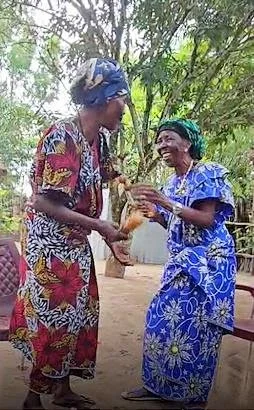
This level of community involvement is integral to the Pende way of life. Over the last five years, the Communiqué has documented this spirit of participation, especially through the transporting of stones, sand, lumber, clay, and water.
Everyone is working toward the greater good and it is a cultural understanding that comes as second nature. There is a term in traditional education known as, ‘uthemengi’, a guide to teach the wisdom needed to live a meaningful life. Colette will be including this guiding tenant in the Ami du Livre program through traditional parables.
There are three types of chiefs, or chefs, that oversee village life. There is the village chief, the clan chief, or lemba, and the chef du groupement. Each chief has his own spheres of influence. The village chief largely intercedes on conflicts in day to day life, from small quarrels to greater offenses. The clan chief has the primary responsibility of looking out for the welfare of the community and managing access to the traditional lands.
The position of the chef du groupement was originally created by the Belgians to collect tributes, or taxes, for the Belgian government. Presently, the position is a conduit for the Congolese government. Both the village chief and the clan chief are selected through matriarchs, but there is an elaborate system in place to identify future chiefs who are qualified to lead. It is important to note that all three chefs often communicate with one another when it comes to the well being of the community.
Traditionally the men in the community grow cash crops such as rice, and coffee. They are also tasked with planting palm trees to harvest palm wine and make palm oil. They are responsible with hunting game and fishing to feed not just their family, but the greater village. The men have also had the responsibility of defending the tribe against invaders. Women in the community are responsible for the home: the raising of the children, the growing of the subsistence crops, fetching water, pounding grain into flour and the preparing of meals.
Life in the Pende community is a formidable web woven over many hundreds of years. The social structure of Pende society has been influenced by many outside forces, such as the Portuguese and Belgians, as well as religious organizations and neighboring tribes. REVE Kandale has been working in collaboration with the community and the community has become energized with the vision of a new future. A future with a constant water supply, education from kindergarten through high school, education about agriculture and business, greater access to medicine, electricity and a connection to the outside world. On her most recent visit Colette was brought to tears over the improved conditions of the roads. One might speculate that the powers that make the decisions for building roads are paying close attention to Kandale.